Vegeta
Constant-rate HTTP load testing from the command line, in Go.
What it is
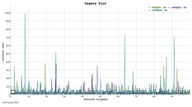
Vegeta attacks a target at a specified constant request rate rather than with a fixed number of virtual users, which is the right model when you want to know how the system behaves at 500 requests per second. It outputs latency histograms and plots, and composes well in shell pipelines.
Best for
Where it is strong
- Constant-rate model avoids the coordinated-omission problem that distorts VU-based tools.
- Single static binary, trivial to run anywhere.
- Composable output for scripting and pipelines.
Where it falls short
- No scenarios or session state — one target list, one rate.
- No GUI or built-in reporting beyond plots.
- Go library usage required for anything sophisticated.
Pricing
Free and open source
Open sourceFree tier: Everything, self-hosted
What drives the bill: Free and open source. You pay in engineering time and CI minutes.
Check current pricing on OSS community’s siteFigures are indicative and were last reviewed August 2026. Vendors change pricing often; confirm before you commit.
Works with
What people who use Vegeta say
No reviews of Vegeta yet. If you have used it in anger, yours would be the first.
Alternatives to Vegeta
If Vegeta is not the right fit, these solve the same problem differently.